Destination and Place
Marrakech, the pearl of southern Morocco, stands out as an iconic city that blends centuries-old traditions with vibrant modernity. As the host city of the Marrakech Folklore Days festival, it offers a unique and enchanting setting to celebrate global cultural diversity.
Listed as a UNESCO World Heritage Site, Marrakech is renowned for:
- Its historical heritage: With iconic landmarks such as the Koutoubia Mosque, Bahia Palace, and the Majorelle Gardens, the city takes visitors on a journey through time.
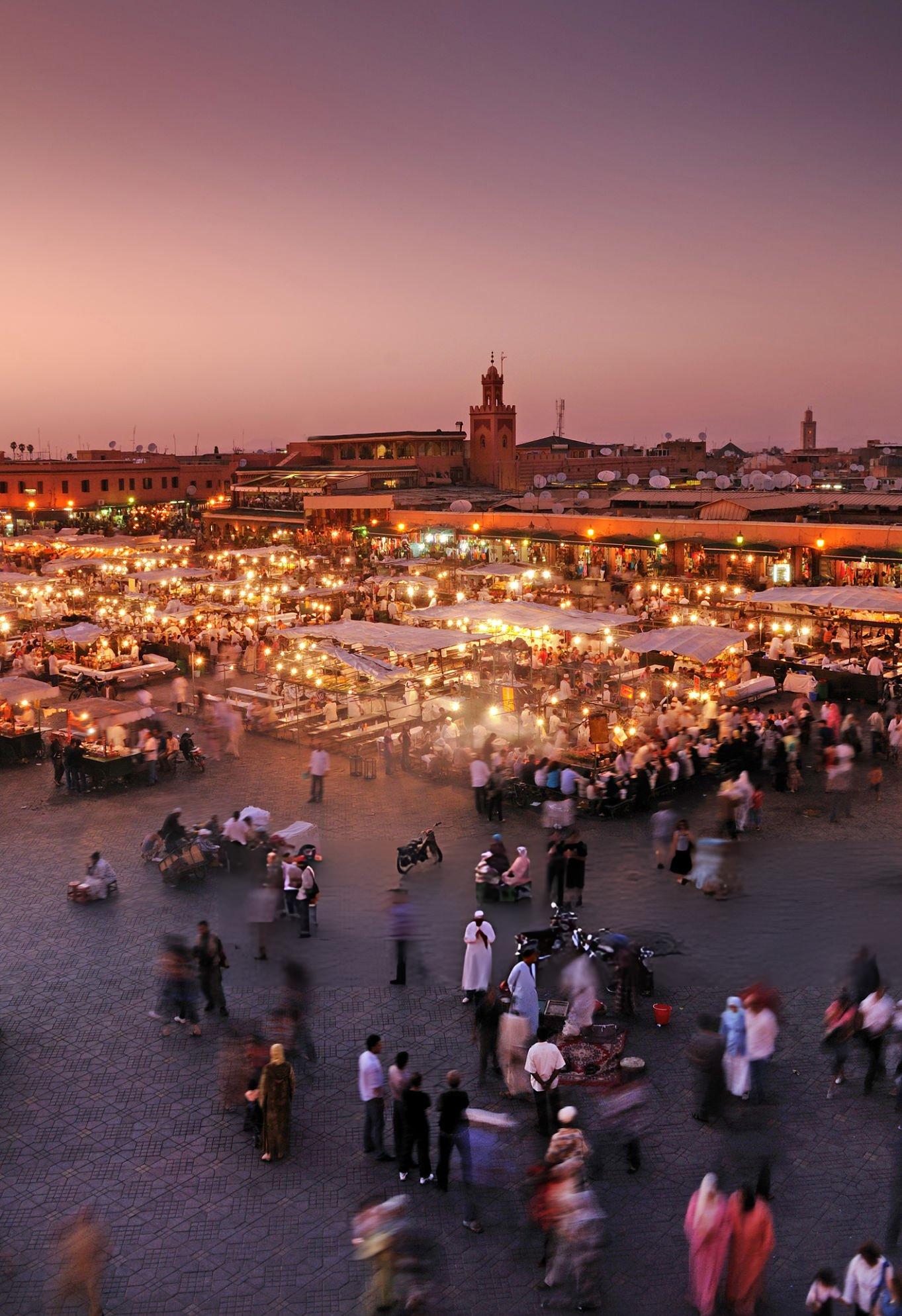
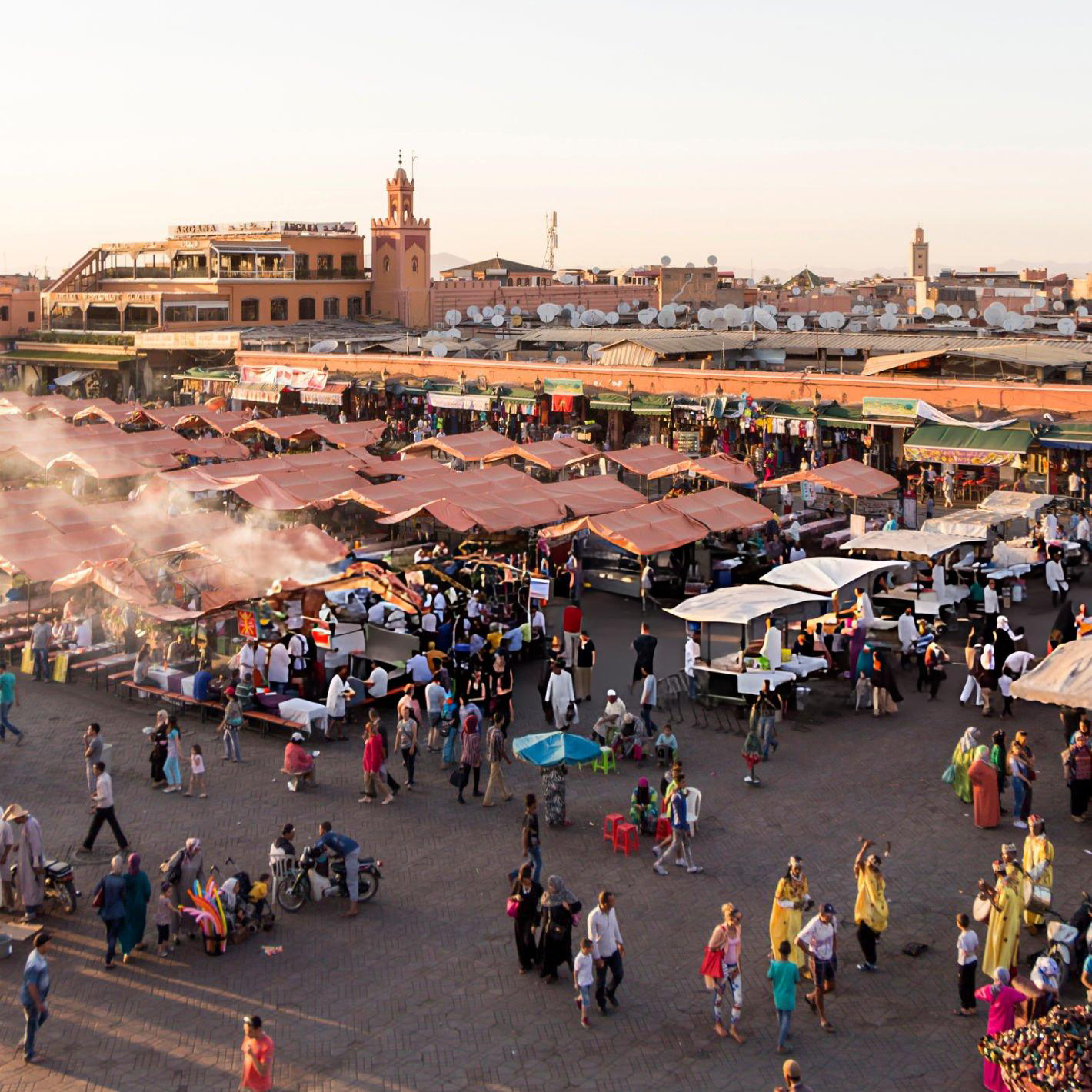
- Jemaa El Fna Square: The beating heart of the city, this legendary square is a living stage where musicians, storytellers, and street performers come together.
- Its cultural richness: Marrakech is a crossroads of civilizations where Moroccan traditions meet global influences.
- Its legendary hospitality: The people of Marrakech warmly welcome visitors, offering them an authentic glimpse into Moroccan culture.
As a host city, Marrakech does more than provide a venue — it embodies the spirit of Marrakech Folklore Days, bringing people together and creating an atmosphere where peace, unity, and cultural diversity are celebrated. A magical city, perfect for a global celebration of traditions and folklore.
THE MEDINA, HISTORIC HEART OF MARRAKECH
Surrounded by a vast palm grove, the medina of Marrakech is known as the “Red City” due to its distinctive clay buildings and ramparts, built during the Almohad dynasty.
At the heart of the medina lies Jemaa el-Fna Square, a vibrant marketplace and cultural hub.
Nearby stands the Kutubiyyah Mosque from the 12th century, featuring a 253-foot (77-meter) minaret built by Spanish captives.
Marrakech’s layered history is reflected in landmarks such as the Saadian Tombs from the 16th century, the Dar el-Beïda Palace from the 18th century (now a hospital), and the Bahia Palace, a 19th-century royal residence.
Much of the medina remains enclosed by its original 12th-century walls. Among its historic gates, Bab Agnaou, carved in stone, stands out as a remarkable example of Almohad architecture.
TWO FACES, ONE SOUL
The city of Marrakech is divided into two distinct parts: the Medina, the historic old town, and Gueliz, the modern European-style district also known as the New City.
The Medina is a maze of narrow alleys and charming local shops, full of traditional character and life.
In contrast, Gueliz is home to modern restaurants, fast-food chains, and international brand stores, reflecting the city’s contemporary flair.
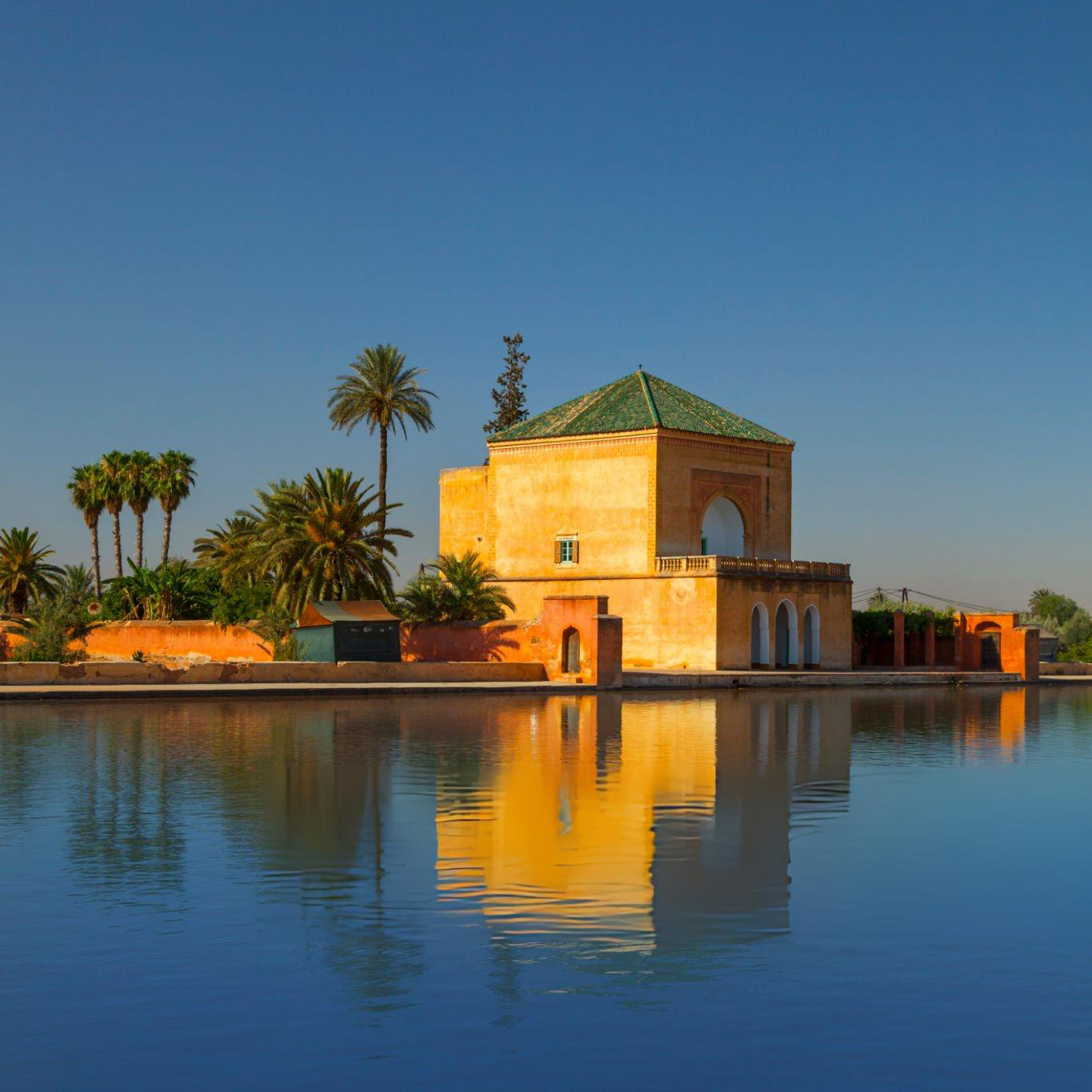
Marrakech is also renowned for its green spaces, notably the Menara olive grove and the Agdal Gardens, which stretch across 1,000 acres (405 hectares) of walled land.
A centuries-old irrigation system, built by the Almoravids, is still in use today to nourish the city’s lush gardens.